Sunday, 1 July 2001
The Great Northern War, the Great Wrath and the Finns
A comprehensive history of the Great Northern War as Finland's most significant historical turning point — the soldiers, their backgrounds, their fates and their families, from Narva to the Russian occupation and the peace.
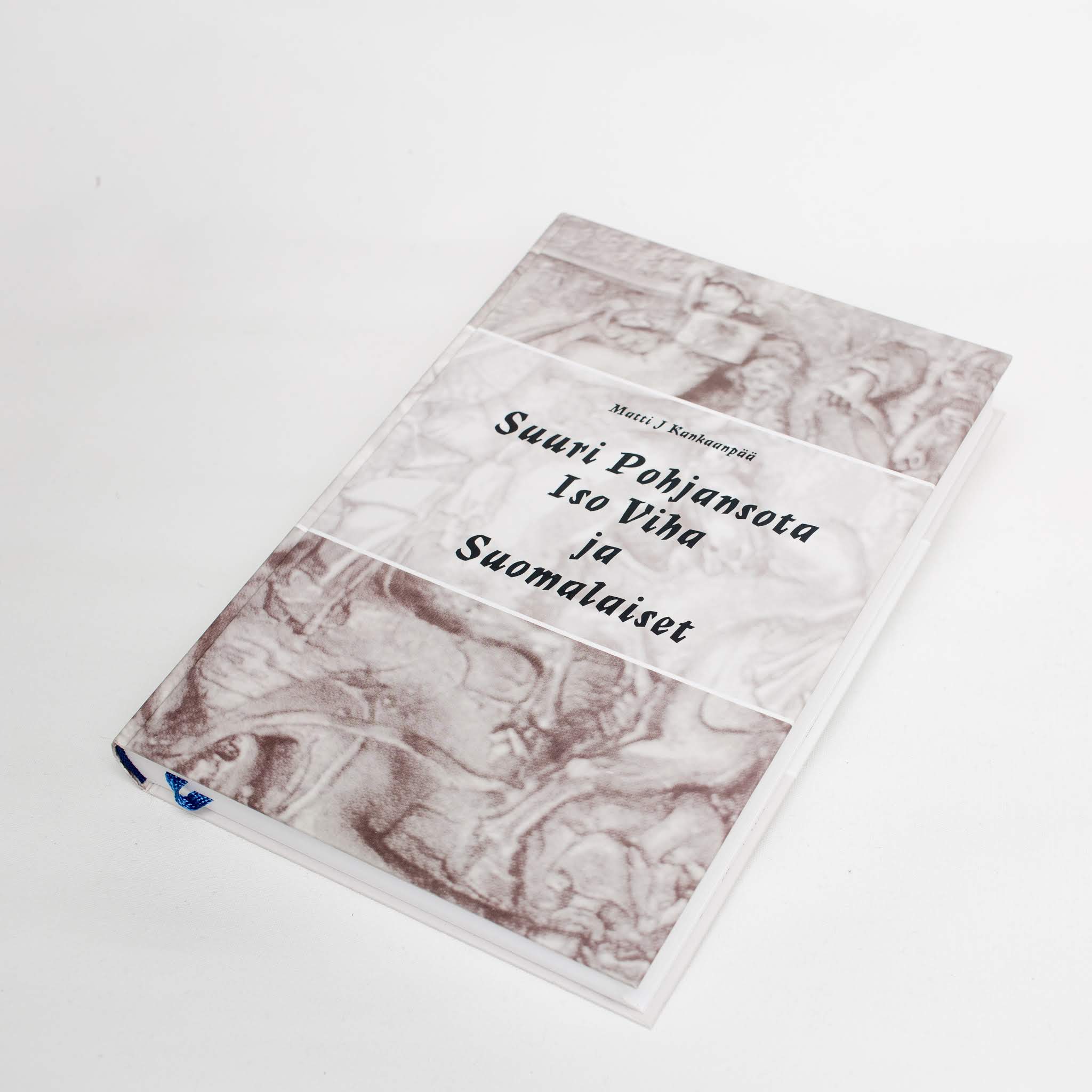
Suuri Pohjansota, Iso Viha ja suomalaiset
2001 · 464 s. · ISBN 952-91-3934-9
Pohjan sota oli Suomen historian merkittävin murroskausi. Kirja kertoo pitkän sodan vaiheista suomalaisten silmin — sekä sotilaiden että siviilien kokemuksista.
The Great Northern War (1700–1721) was Finland’s most significant historical turning point — a catastrophe that reshaped the country’s population, culture and geography. For ordinary Finns, it meant war, occupation, famine and flight. This book tells their story.
Suuri Pohjansota, iso viha ja suomalaiset (The Great Northern War, the Great Wrath and the Finns) is organised in two parts:
Part 1: 1700–1710 (Narva to Poltava)
The war began with Charles XII’s spectacular victory at Narva in 1700 and swept through Livonia, Ingria and Karelia. Finnish troops participated in all the main theatres of the early war. Part 1 follows the campaigns from Sweden’s greatest triumph to its greatest disaster at Poltava in 1709.
Finnish soldiers from the allotment regiments — ordinary men from ordinary farms — are the focus. Who were they? Where did they come from? The muster rolls, church records and poll tax registers provide the answers.
Part 2: 1710–1721 (The Great Wrath)
Part 2 covers the fall of Viipuri (1710), the defence of Finland, the Battle of Napue (Isokyrö, 1714), the subsequent Russian occupation of Finland, guerrilla resistance, operations on the Bothnian coast and in Norway, and the return of prisoners and refugees after the Peace of Uusikaupunki (1721).
The book addresses:
- The causes of the occupation — military, political, logistical
- The fate of prisoners of war — how many were taken, what happened to them in Russia
- The flight of refugees — who left Finland, where did they go, did they return
- Conscription under occupation — the Russian mantle-men of 1720
Sources
The book draws on extensive archival sources: muster rolls, casualty lists, church records, poll tax registers, court records and correspondence. The source documentation is thorough, with several hundred footnotes.
Companion Volume
This book is the companion to Suomalainen ratsuväki Ruotsin ajalla (Finnish Cavalry in the Swedish Era, 2016), which covers the full period of Swedish-era Finnish cavalry. Together the two works form the most comprehensive Finnish-language treatment of Finland’s military history in the Swedish period.