Tuesday, 1 July 2003
Pori County Infantry Regiment — General Muster Roll 1728
A transcription of the general muster roll of the Pori County Infantry Regiment from 1728 — an essential genealogical source for soldiers from the allotment system in Satakunta and surrounding areas.
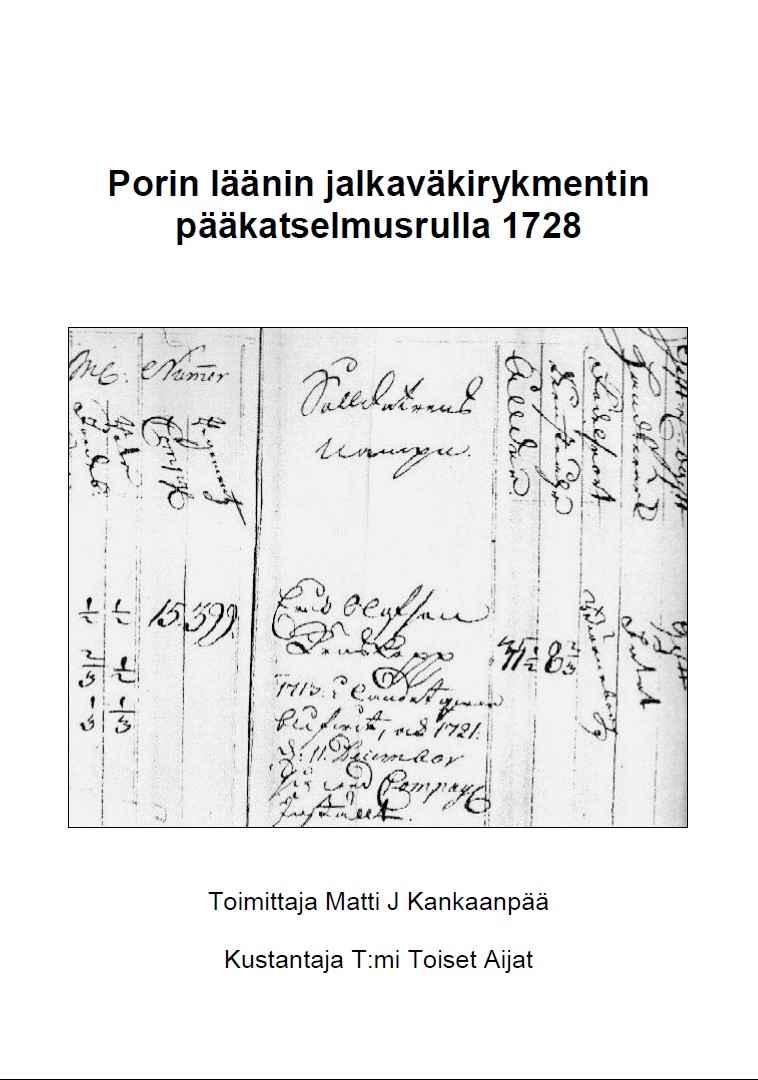
Porin läänin jalkaväkirykmentin pääkatselmusrulla 1728
2003 · 198 s. · ISBN 952-99106-3-0
Pääkatselmusrulla vuodelta 1728. Keskeinen lähde Porin läänin sotilassukututkimukseen.
The Pori County Infantry Regiment (Porin läänin jalkaväkijoukot, abbreviated PJR) is one of the allotment-system infantry regiments of the Swedish era. This publication presents a transcription of the regiment’s general muster roll from 1728, extracted from the National Archives (Kansallisarkisto) collection KA Militaria PJR 167.
Why the 1728 Roll?
The 1728 muster roll is the first surviving roll that includes not only the soldiers but also the farms responsible for maintaining each allotment (ruotu). This additional information makes it invaluable for genealogists: it allows a researcher to trace which farms in a given village were obligated to maintain which soldiers.
The roll was made following the previous general muster in autumn 1721, after the end of the Great Northern War and the Great Wrath. It therefore captures the state of the regiment as it was rebuilt after that catastrophe.
Content
The roll includes:
- The farm-holder registers for each company, listing the allotment-maintaining farms by name and their assessed military contribution
- Company maps showing the billeting farm locations
- Individual soldier entries with name, age, place of origin, physical description and service notes
Usefulness for Later Research
Although the roll dates from 1728, it remains useful even for researchers tracing soldiers from later periods in the 18th century or from the Finnish War (1808–09). The troop numbers assigned to each allotment were generally kept unchanged throughout the system’s operation, so a researcher who knows a soldier’s regiment and company number can work backwards from later rolls to find the same allotment in the 1728 roll and thus identify the responsible farms.
Published: Virrat, 2003. Source: KA Militaria PJR 167.